
Director liability in Serbia: duties to the company, to creditors and in insolvency
Director liability in Serbia is first and foremost liability to the company: a director compensates the company for loss caused by breaching the duty of care, the rules on personal-interest transactions, conflicts of interest, confidentiality or the non-compete obligation. The company is liable for loss its director causes to a third party in performing their functions, and a director is personally liable to the company's creditors only where the law specifically says so. Criminal and misdemeanour liability exist independently.
A director is not liable because a deal went wrong. A director is liable for breaching a statutory duty: the duty of care, the rules on personal interest and conflicts of interest, or rules that protect creditors.
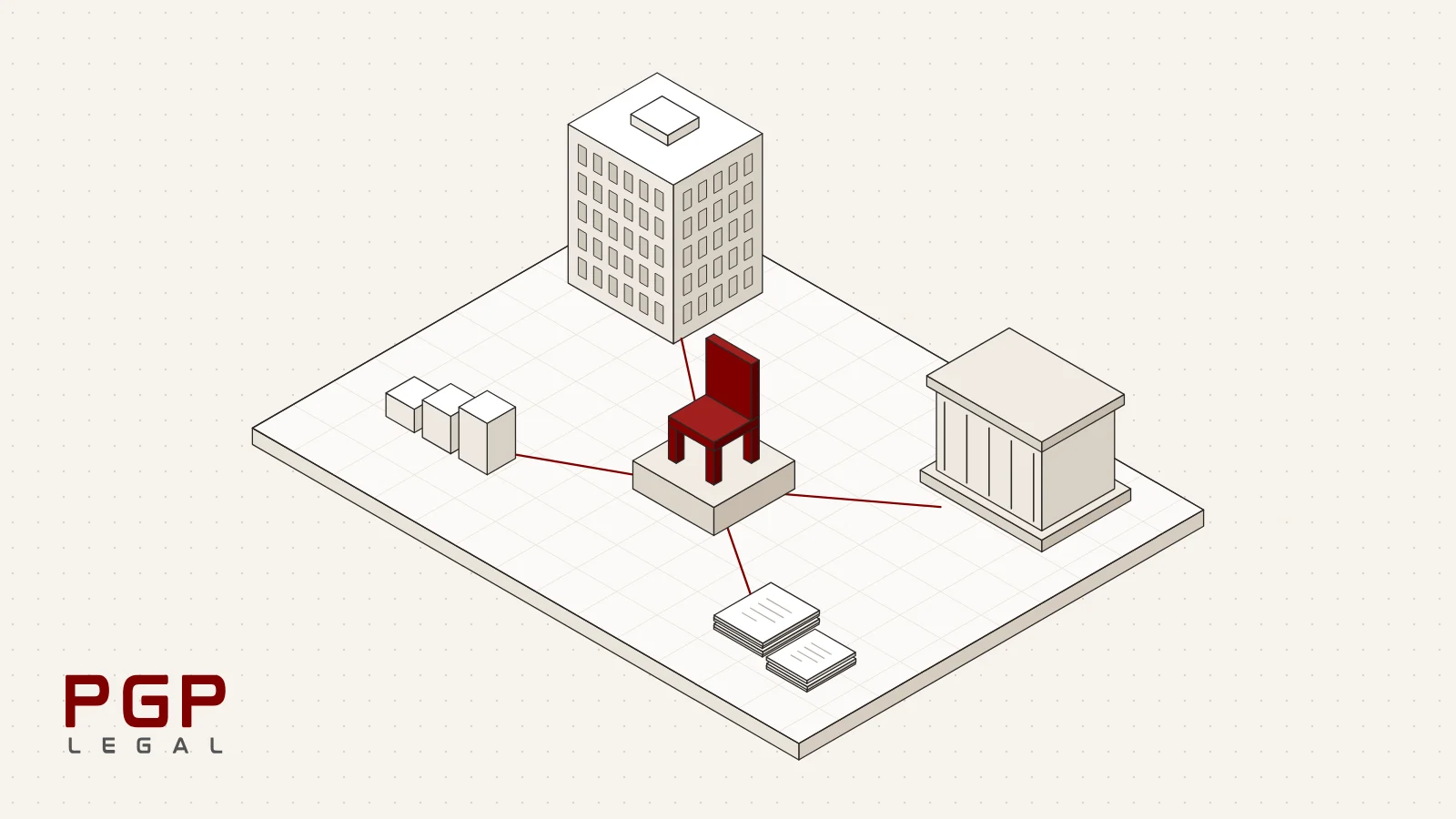
To whom and for what a director is liable
The core rules are in the Companies Law (Zakon o privrednim društvima, "Sl. glasnik RS", No. 36/2011, 99/2011, 83/2014 - other law, 5/2015, 44/2018, 95/2018, 91/2019, 109/2021 and 19/2025), in the part on special duties owed to the company (Articles 61-80 Companies Law). They apply to directors of both the limited liability company (društvo s ograničenom odgovornošću, DOO) and the joint-stock company (akcionarsko društvo, AD). This article assumes a company with one-tier management (jednodomno upravljanje), without a supervisory board (Articles 198 and 326 of the Companies Law).
| Liable to | For what | Who brings the claim |
|---|---|---|
| The company | Breach of special duties; unlawful payments to members | The company; for breach of special duties, also a member with at least 5% of the capital |
| Members | Loss a member suffers personally | The member |
| Creditors | Only in cases provided by law | The creditor |
| Third parties | For loss caused in performing their functions, the company is liable, with recourse against the director | The injured party, then the company |
| The State | Criminal offences, commercial offences and misdemeanours | Public prosecutor and competent authorities |

Liability for loss to the company: the duty of care
A director must act conscientiously, with the care of a prudent businessperson and in the reasonable belief that they are acting in the company's best interests (Article 63(1) Companies Law). The benchmark is a reasonably careful person with the knowledge and experience expected for the role, plus any special knowledge the director has (Article 63(2) and (3) Companies Law). The company may sue the director for loss caused by a breach of this duty (Article 64 Companies Law).
The law also provides a defence. A director may rely on information and opinions of experts they reasonably believe to have acted conscientiously (Article 63(4) Companies Law). A director who proves compliance with these rules is not liable for the resulting loss (Article 63(5) Companies Law). The burden of proof is on the director, so the defence consists of evidence of how the decision was taken: the analysis, the expert opinion, the minutes, the approval.
Transactions with a personal interest and conflicts of interest
Where a director or a related person has a personal interest in a company transaction, the director must notify the competent body. In a company with a single director, that is the members' or shareholders' meeting (skupština) (Article 65 Companies Law). Approval is required only for a transaction worth at least 10% of the book value of the company's total assets in the last annual balance sheet (Article 66(11)(1) Companies Law). Several related transactions within one year count as one (Article 66(12) Companies Law). In a DOO such a transaction is approved by a simple majority of the votes of all members without a personal interest, unless the founding act requires a different majority, after a fair value assessment (Article 66(1)(2) and (2) Companies Law). No approval is needed where the personal interest is that of the sole member or of all members (Article 66(11)(2) and (3) Companies Law).
For a transaction requiring approval, the company must publicly disclose the prescribed information on its website or the business register's website immediately after approval and no later than the day the transaction is concluded (Article 66(10) Companies Law).
Without approval, without full information to the approving body or at a price other than fair value, the company may seek annulment of the transaction and damages (Article 67(1) Companies Law). The consequence is also personal. Where it finds a breach of the approval rules, the court also imposes on the director a temporary restriction on holding office for 12 months (Articles 67(2) and 78(2) Companies Law). The restriction is entered in a register kept by the Serbian Business Registers Agency (APR) (Article 67(3) Companies Law).
The duty to avoid conflicts of interest bars a director from using the company's assets, non-public information or business opportunities for themselves or related persons, and from abusing their position (Article 69 Companies Law). An exception requires approval under Article 66 of the Companies Law and is not available for abuse of position (Article 70 Companies Law). The company may claim damages and the transfer of any benefit obtained (Article 71 Companies Law).
Confidentiality and non-compete
A director must keep the company's trade secrets for two years after leaving office; the company's acts or a contract may extend this to five years at most (Article 72(2) Companies Law). Without approval, a director may not hold office, work, be engaged or hold an interest in a competing company, or trade as a sole trader in the same line of business. After leaving office the prohibition applies only if the founding act or articles of association provide for it, and for two years at most (Article 75 Companies Law). For a breach the company claims damages and, under the non-compete rules, the transfer of the benefit obtained (Articles 74 and 76 Companies Law). The statutory non-compete prohibition does not apply to the company's sole member (Article 75(3) Companies Law).

Who can sue a director, and when
A claim for loss suffered by the company is brought by the company. In a DOO the members' meeting decides on proceedings against the director and on who represents the company (Article 200, item 19 Companies Law). The director cannot represent the company in a dispute against themselves (Article 222 Companies Law). A member may sue the director for loss suffered personally (Article 78 Companies Law). Members holding at least 5% of the share capital may bring a derivative action in their own name on the company's behalf. The condition is that the company rejected their written request to sue or did not act on it within 30 days (Article 79 Companies Law).
The company's claim for breach of special duties, and a derivative action, must be brought within six months of learning of the breach and in any event within five years of it (Articles 77 and 79 Companies Law). For an AD director, Article 415 of the Companies Law also provides for liability for loss caused by breaching that Law, the articles of association or a general meeting resolution, except where the director acted on a general meeting resolution; the company's claim is time-barred three years after the loss arose. The law does not say how that period relates to the periods in Article 77 of the Companies Law, and it does not expressly lay down the Article 415 rule of the Companies Law for a DOO director. What changes after a director leaves office is covered in our article on a director's liability after dismissal.
Is a director liable to the company's creditors?
A director is not liable for the company's debts merely by being the director. A creditor can claim from the director personally only what the law expressly allows, for example:
- Profit distribution despite a deterioration. A DOO director who knows that the company's position has deteriorated significantly, and not merely temporarily, since the year end, but does not tell the members' meeting before the annual financial statements are adopted, is liable to members and creditors for the loss caused by distributing profit (Article 184(2) and (3) Companies Law).
- Information in bankruptcy. The debtor's authorised persons are liable to creditors for loss caused by withholding information or by a negligently prepared report on the debtor's economic and financial position (Bankruptcy Law (Zakon o stečaju, "Sl. glasnik RS", No. 104/2009, 99/2011 - other law, 71/2012 - Constitutional Court decision, 83/2014, 113/2017, 44/2018, 95/2018 and 44/2025 - Constitutional Court decision), Article 61(6)).
- Unpaid tax. A legal representative who knowingly or without due care failed to pay tax that the company was able to pay bears a secondary tax liability for that amount (Law on Tax Procedure and Tax Administration (Zakon o poreskom postupku i poreskoj administraciji, "Sl. glasnik RS", No. 80/2002, 84/2002 - corr., 23/2003 - corr., 70/2003, 55/2004, 61/2005, 85/2005 - other law, 62/2006 - other law, 63/2006 - corr. of other law, 61/2007, 20/2009, 72/2009 - other law, 53/2010, 101/2011, 2/2012 - corr., 93/2012, 47/2013, 108/2013, 68/2014, 105/2014, 91/2015 - authentic interpretation, 112/2015, 15/2016, 108/2016, 30/2018, 95/2018, 86/2019, 144/2020, 96/2021, 138/2022, 94/2024, 109/2025 and 80/2026), Article 31).
A DOO member who abuses limited liability, for example by using the company's assets as their own, is liable for the company's debts (Article 18 of the Companies Law). This affects a director only if the director is also a member.
The company is liable for loss its director causes to a third party in performing their functions (Law on Obligations (Zakon o obligacionim odnosima, "Sl. list SFRJ", No. 29/78, 39/85, 45/89 - decision of the Constitutional Court of Yugoslavia and 57/89, "Sl. list SRJ", No. 31/93, "Sl. list SCG", No. 1/2003 - Constitutional Charter and "Sl. glasnik RS", No. 18/2020), Article 172(1)). Unless the law provides otherwise, the company may then recover the amount from a director who caused the loss intentionally or through gross negligence, within six months of paying (Article 172(2) and (3) Law on Obligations).
Director liability before and in bankruptcy
Once a company's account is frozen or it is unable to pay its debts, management decisions may later be scrutinised in bankruptcy. Four rules then matter for the director:
- Frozen funds. Funds blocked for enforced collection may not be used for other payments (Law on Payment Transactions (Zakon o platnom prometu, "Sl. list SRJ", No. 3/2002 and 5/2003 and "Sl. glasnik RS", No. 43/2004, 62/2006, 111/2009 - other law, 31/2011 and 139/2014 - other law), Article 48(7)). This is a misdemeanour: the company is fined RSD 200,000 to 2,000,000 and the responsible person RSD 10,000 to 150,000 (Article 50 Law on Payment Transactions).
- Payments to members. Profit, loan repayments and other payments to members are prohibited if, according to the latest annual financial statements, net assets are, or would become, lower than the paid-in share capital plus mandatory reserves (Companies Law, Articles 182, 184 and 275). A director who approved such a payment, knowing or able to know it was prohibited, is jointly and severally liable without limit to the company for its repayment (Article 185(3) Companies Law). Statutory exceptions to these restrictions apply, including payments under an employment contract to a member who is a natural person (Article 184(1), read with Article 275(3), Companies Law).
- Avoidance actions. Transactions that harm creditors or put some of them in a better position may be challenged in bankruptcy (Bankruptcy Law, Article 119). Where the counterparty is the director or another related person, it is deemed to have known, or to have been bound to know, of the insolvency (Articles 120(4) and 125 Bankruptcy Law). Repaying a loan to a related person in the year before bankruptcy is opened is deemed an act intended to harm creditors (Article 123(3) Bankruptcy Law).
- After bankruptcy is opened. The director's powers pass to the bankruptcy administrator (Article 74 Bankruptcy Law). The director must still give information to the bankruptcy judge and the administrator and hand the books, documents, stamps and passwords to the administrator, and is liable to creditors for withholding information (Article 61(1)-(3) and (6) Bankruptcy Law).
In a DOO the members' meeting decides whether the company files for its own bankruptcy (Companies Law, Article 200, item 10). The director must inform members holding at least 10% of the capital of extraordinary circumstances without delay (Article 226(2) Companies Law). See also our articles on a blocked company account in Serbia and on filing for your own company's bankruptcy.

Criminal, commercial-offence and misdemeanour liability
The Criminal Code (Krivični zakonik, "Sl. glasnik RS", No. 85/2005, 88/2005 - corr., 107/2005 - corr., 72/2009, 111/2009, 121/2012, 104/2013, 108/2014, 94/2016, 35/2019, 94/2024 and 63/2026) treats a director as a responsible person within a legal entity (Article 112(5) Criminal Code). A director may commit, among others, the following offences: abuse of position by a responsible person (Article 227 Criminal Code), tax evasion and failure to pay withholding tax (Articles 225 and 226 Criminal Code), causing bankruptcy or fraudulent bankruptcy (Articles 232 and 232a Criminal Code), and harming creditors (Article 233 Criminal Code). The last is committed by someone who, knowing the business can no longer pay its debts, pays one creditor or otherwise favours it and thereby significantly harms another.
The Companies Law has its own offences: a false statement, a personal-interest transaction intended to cause the company loss, breach of the duty to avoid conflicts of interest and exceeding limits on the authority to represent (Articles 581-584 Companies Law). Where the company's loss exceeds RSD 10 million, the last three carry imprisonment of six months to five years. Together with imprisonment, the court may also ban the offender from a profession, activity or duty for one to ten years, if their continuing it would be dangerous (Criminal Code, Article 85).
Commercial offences (privredni prestupi) are punishable for both the company and the responsible person. For payments to members in breach of the restrictions, failure to publish a personal-interest transaction or new business during liquidation, the company is fined RSD 100,000 to 1,000,000 and the responsible person RSD 20,000 to 200,000 (Companies Law, Article 585).
When you need a lawyer
It makes sense to involve a lawyer before the decision: a related-person transaction, payments to members while the company loses money, an account freeze or a threatened claim against the director. In the fields of corporate law and bankruptcy and restructuring, PGP Legal also advises directors and companies on management duties and represents clients in disputes over director liability.
For example, the director of a loss-making company repays the owner's loan while other creditors wait. If, according to the latest annual financial statements, net assets are below the paid-in share capital, the payment is prohibited, and a director who approved it knowing, or able to know, that it was prohibited is liable to the company for its repayment (Articles 182-185 of the Companies Law). If bankruptcy is opened within a year, the same payment is deemed an act intended to harm creditors and may be avoided (Article 123(3) of the Bankruptcy Law).
If this situation applies to your company, get in touch so that we can review the risks before the next step.
Frequently asked questions
Is a director liable for loss suffered by the company?
Yes, if the loss was caused by breaching the duty of care or other special duties. A director who proves compliance with the standard of care in Article 63 of the Companies Law is not liable. If the company compensates a third party for loss caused by the director intentionally or through gross negligence, it has a right of recourse against the director unless the law provides otherwise; the recourse claim becomes time-barred six months after payment of the compensation (Article 172(2) and (3) Law on Obligations).
What are the duties of a DOO director?
The director manages the business and represents the company in line with the founding act and the members' meeting resolutions (Articles 221 and 224 of the Companies Law). The director is responsible for proper bookkeeping and the accuracy of the financial statements (Article 225 Companies Law) and owes the special duties in Articles 63-76 of the Companies Law.
Is a director liable for the company's debts?
Not merely by being the director. Personal liability to creditors arises only in cases provided by law, such as withholding information in bankruptcy (Article 61 of the Bankruptcy Law) and unpaid tax (Article 31 of the Law on Tax Procedure and Tax Administration). A director who is also a member is liable for abuse of limited liability (Article 18 of the Companies Law).
Can a director face criminal liability and imprisonment?
Yes. Abuse of position by a responsible person, harming creditors, causing bankruptcy and the Companies Law offences carry imprisonment. The court may also ban the person from performing duties for one to ten years (Article 85 of the Criminal Code).
If you need the documentation reviewed or the procedure assessed, write to us.
Sources
- Companies Law (Zakon o privrednim društvima, "Sl. glasnik RS", No. 36/2011, 99/2011, 83/2014 - other law, 5/2015, 44/2018, 95/2018, 91/2019, 109/2021 and 19/2025), Articles 18, 61-80, 182, 184, 185, 198, 200, 221, 222, 224-226, 275, 326, 415, 430, 447 and 581-585.
- Bankruptcy Law (Zakon o stečaju, "Sl. glasnik RS", No. 104/2009, 99/2011 - other law, 71/2012 - Constitutional Court decision, 83/2014, 113/2017, 44/2018, 95/2018 and 44/2025 - Constitutional Court decision), Articles 61, 74, 119, 120, 123 and 125.
- Law on Payment Transactions (Zakon o platnom prometu, "Sl. list SRJ", No. 3/2002 and 5/2003 and "Sl. glasnik RS", No. 43/2004, 62/2006, 111/2009 - other law, 31/2011 and 139/2014 - other law), Articles 48 and 50.
- Law on Obligations (Zakon o obligacionim odnosima, "Sl. list SFRJ", No. 29/78, 39/85, 45/89 - decision of the Constitutional Court of Yugoslavia and 57/89, "Sl. list SRJ", No. 31/93, "Sl. list SCG", No. 1/2003 - Constitutional Charter and "Sl. glasnik RS", No. 18/2020), Article 172.
- Law on Tax Procedure and Tax Administration (Zakon o poreskom postupku i poreskoj administraciji, "Sl. glasnik RS", No. 80/2002, 84/2002 - corr., 23/2003 - corr., 70/2003, 55/2004, 61/2005, 85/2005 - other law, 62/2006 - other law, 63/2006 - corr. of other law, 61/2007, 20/2009, 72/2009 - other law, 53/2010, 101/2011, 2/2012 - corr., 93/2012, 47/2013, 108/2013, 68/2014, 105/2014, 91/2015 - authentic interpretation, 112/2015, 15/2016, 108/2016, 30/2018, 95/2018, 86/2019, 144/2020, 96/2021, 138/2022, 94/2024, 109/2025 and 80/2026), Article 31.
- Criminal Code (Krivični zakonik, "Sl. glasnik RS", No. 85/2005, 88/2005 - corr., 107/2005 - corr., 72/2009, 111/2009, 121/2012, 104/2013, 108/2014, 94/2016, 35/2019, 94/2024 and 63/2026), Articles 85, 112, 225-227, 232, 232a and 233.