Checking a Serbian company before you sign: what APR, NBS and ALSU show, and what the registers do not
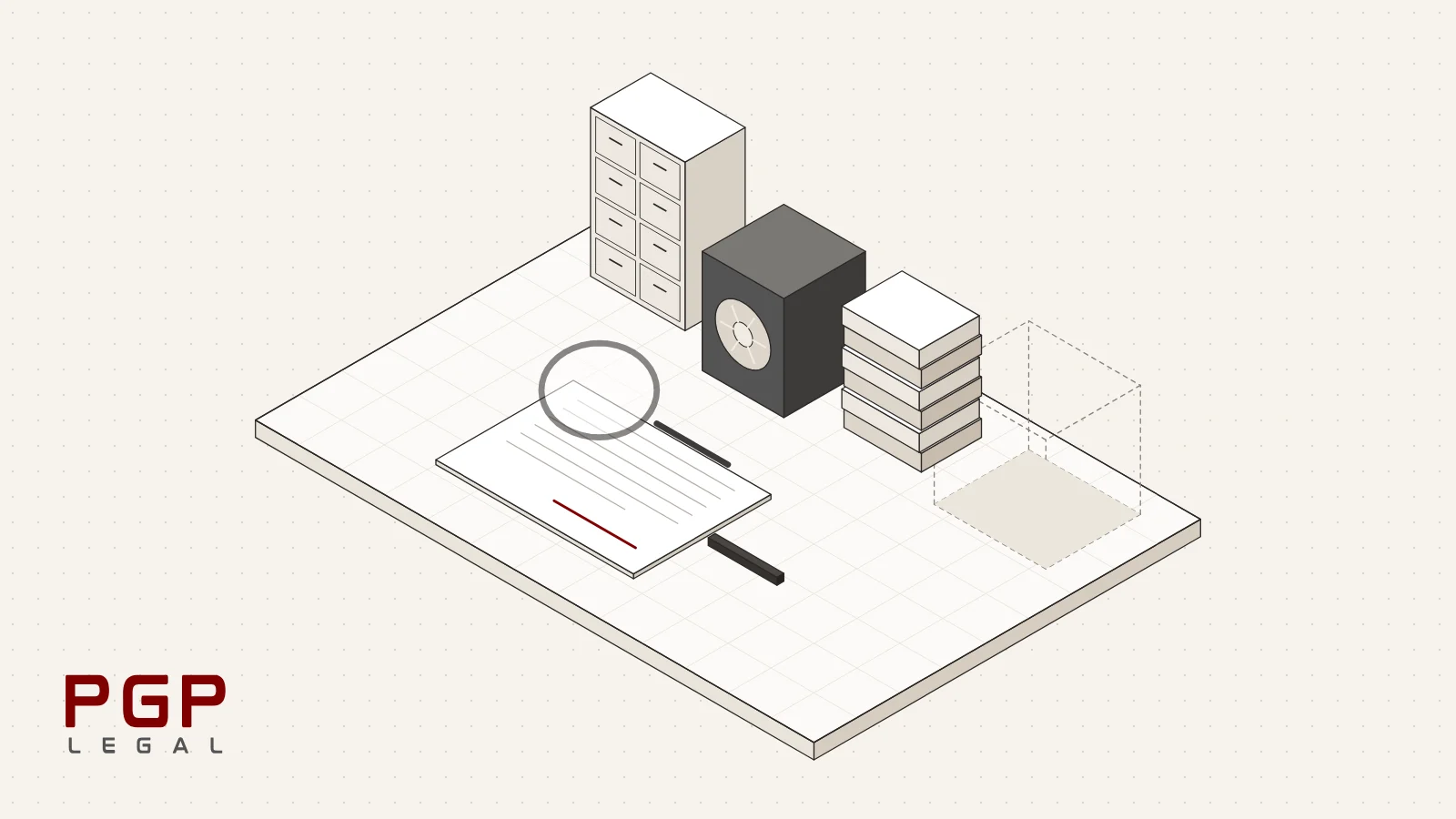
A basic check of a Serbian company before signing uses six public sources: the registers of the Serbian Business Registers Agency (APR) for companies, financial statements, and pledges and leasing, the National Bank of Serbia (NBS) register of debtors in enforced collection, the bankruptcy proceedings database of the Bankruptcy Supervision Agency (Agencija za licenciranje stečajnih upravnika, ALSU), and the eKatastar of the Republic Geodetic Authority (RGZ). Together they show the company's status, who may sign for it, whether its accounts are frozen (blocked) and what is encumbered. They do not show whether your counterparty will pay; that gap is addressed by the documents you ask for and the security you agree.
A register shows that a company is active, not that it will pay. Even so, you are deemed to be aware of data registered with APR from the day after the registration is published (Companies Law (Zakon o privrednim društvima, "Sl. glasnik RS", No. 36/2011, 99/2011, 83/2014 - other law, 5/2015, 44/2018, 95/2018, 91/2019, 109/2021 and 19/2025), Art. 6(2)). If the counterparty goes bankrupt, the Bankruptcy Law (Zakon o stečaju, "Sl. glasnik RS", No. 104/2009, 99/2011 - other law, 71/2012 - Constitutional Court decision, 83/2014, 113/2017, 44/2018, 95/2018 and 44/2025 - Constitutional Court decision) specifically mentions an uninterrupted account freeze of at least 30 days in the rule on when you are deemed to have known, or to have been bound to know, of its inability to pay (Art. 120(3) Bankruptcy Law).
Six sources and what each one does not show
| Source | What it shows | What it does not show |
|---|---|---|
| APR, business register | Status, registered seat, legal representatives and registered limits on their authority | Debts, disputes or ability to pay |
| APR, financial statements | Annual financial statements and whether they were filed | Current position; the latest statements cover the previous year at best |
| APR, pledge register and financial leasing register | Pledges over movables and rights, and leased equipment, which the counterparty does not own | Mortgages and obligations that are not registered |
| NBS, register of debtors in enforced collection | Whether the accounts are frozen today, the amount without interest, and days and periods of freezes over five years | Debts not yet in enforced collection, including tax debt |
| ALSU, bankruptcy proceedings | Opening date, court, ruling number, bankruptcy administrator and status of the case | Difficulties of a company against which no bankruptcy has been opened |
| RGZ, eKatastar | For a specific property: the registered owner, mortgages and annotations | The condition on site, unregistered buildings and unregistered leases |

Two more NBS databases are worth opening. The Single Register of Accounts shows who holds a given bank account, so before the first payment, confirm that the account on the invoice belongs to your counterparty. The Register of Bills of Exchange and Authorisations, searched by the company's registration number (matični broj), lists the promissory notes (menice) registered with the company as debtor and, for blank notes, the basis on which they were issued: in other words, how many notes it has already given to others.
What the designation next to the company name means
The proceedings a company is in appear as a designation added to its business name (Art. 22 of the Companies Law and Art. 78 of the Bankruptcy Law). Each designation changes the answer to whether you should be contracting with the company at all.
| Designation | What it means for a new contract |
|---|---|
| "u likvidaciji" (in voluntary liquidation) | The company is represented by a liquidator, who completes pending business, sells assets and pays creditors (Art. 532 Companies Law). Entering into new business during liquidation is a commercial offence (privredni prestup) (Art. 585(1)(10) Companies Law). |
| "u prinudnoj likvidaciji" (in compulsory liquidation) | From the date of the notice, the company may only complete business already started, with no new business (Art. 547a(1) Companies Law). After the notice has run for 60 days, APR strikes the company off within a further 30 days (Arts 547(4) and 547b Companies Law). |
| "u stečaju" (in bankruptcy) | The powers of the director and other representatives pass to the bankruptcy administrator, and any disposal of estate assets the debtor makes after the opening has no legal effect, except where the rules on reliance on public registers (javne knjige) apply (Art. 74 Bankruptcy Law). |
Before compulsory liquidation, APR publishes a notice about the company on the register's website (Art. 547(1)-(3) Companies Law). A company that has failed to file financial statements for two consecutive years has a ground that cannot be cured (Art. 546(1)(10) and (2) Companies Law). Even one missing set of statements is a warning. How creditors recover in that situation is explained in our article on how compulsory liquidation affects creditors.
A sole trader (preduzetnik) is liable for business debts with all of their assets, even after being struck off (Art. 85 Companies Law). If the business account has been frozen for more than two years without interruption, APR strikes the sole trader off, on the initiative of the NBS or the Tax Administration, unless the account is unblocked within 90 days of publication of APR's notice (Art. 91 Companies Law).
How to read an account freeze
Enforced collection (prinudna naplata) from bank accounts is carried out by the NBS through an account freeze, commonly called a blocked account (blokada). On receiving an enforceable decision of the tax or another authority, a court decision or another enforceable title, the NBS instructs the banks to freeze all of the debtor's accounts and not to open new ones (Law on Payment Transactions (Zakon o platnom prometu, "Sl. list SRJ", No. 3/2002 and 5/2003 and "Sl. glasnik RS", No. 43/2004, 62/2006, 111/2009 - other law, 31/2011 and 139/2014 - other law), Art. 48(2)). Funds in frozen accounts may not be used for other payments (Art. 48(7) Law on Payment Transactions). A counterparty under a freeze therefore cannot pay you from its own account, even if it wants to.
Collection follows a fixed order: decisions of the tax and other authorities first, then court decisions and other enforceable titles, then creditors' orders based on matured bills of exchange and authorisations, each group by time of receipt (Art. 47 Law on Payment Transactions). A promissory note from a counterparty that is already frozen is therefore not a quick route to payment.
The amount shown in the register is updated hourly between 9:00 and 17:00 on working days, and according to the NBS the data is official and may be used for official purposes without a certificate. For a contract, the freeze history matters more than today's figure, and it should be reflected in the payment terms and the security.
Being paid by a frozen counterparty, and the risk of avoidance
The risk does not end when the counterparty pays. If it later goes bankrupt, ordinary settlement of a debt in the six months before the bankruptcy petition can be set aside in an avoidance action if the debtor was then unable to pay and the creditor knew or should have known (Art. 120(1) Bankruptcy Law). The creditor is deemed to have known or to have been bound to know if it knew of circumstances from which the inability to pay can be inferred beyond doubt, in particular if the debtor's account had been frozen for at least 30 days without interruption (Art. 120(3) Bankruptcy Law).
Avoidance is excluded where the debtor, at the same time or within a short period before or after, received equivalent value in return (Art. 126(2) Bankruptcy Law). Advance payment and payment on delivery therefore reduce both risks, while deferred payment to a counterparty with a history of freezes reduces neither. The company's own options during a freeze are covered in our article on a company with a blocked account.
Who signs, and why the date of the check matters
The Companies Law protects those who rely on the register: a third party does not bear the adverse consequences of incorrectly registered data (Art. 6(1) Companies Law). The rule also works against you. You are deemed to know registered data from the day after its publication, and you may prove that this was impossible only for the first 15 days (Art. 6(2) and (3) Companies Law).
Internal limits on a representative's authority, such as an amount above which the director may not sign alone, cannot be relied on against you (Art. 33(2) Companies Law). Only joint representation and a mandatory co-signature can, and only if they are registered (Art. 33(3) Companies Law). So check the signatory on the day of signing, together with the manner of representation, and keep a dated copy of the register entry. Where a procurator (prokurista) signs and the transaction concerns real estate, shares or interests, promissory note obligations or suretyship, or a loan or credit, the procurator needs special authorisation (Art. 38(1) Companies Law), so ask to see it before signing.
What the registers do not show, and what to ask for
Two of the gaps are disputes and tax debt. The Serbian Judiciary Portal shows the progress of commercial court cases only once you enter the court, the register, the case number and the year; it cannot be searched by party name. Tax debt not yet in enforced collection does not appear in the NBS register. Before a larger contract it is therefore reasonable to ask the counterparty for:
- certificates from the Tax Administration (Poreska uprava) and the local self-government unit confirming that its tax liabilities have been settled;
- a statement of disputes, enforcement proceedings and bankruptcy petitions, with case numbers, included in the contract;
- interim financial information for the current year;
- a written power of attorney, where the signatory is not a registered representative;
- the bank's confirmation that the promissory note has been registered.
Check the case numbers on the portal. An untrue statement then becomes a breach of contract on the counterparty's side.

What to agree after the check
Forms of security differ in where the money comes from when the counterparty does not pay:
- Promissory note (menica). It is collected from the counterparty's account through enforced collection on your order, and only if registered with the NBS (Art. 47a Law on Payment Transactions), so collection depends on the balance of that account.
- Bank guarantee. The bank pays, so collection does not depend on the counterparty's account.
- Pledge and mortgage. A registered pledge or mortgage gives a right to be paid from the encumbered asset and, in the counterparty's bankruptcy, the position of a secured creditor (creditor with a right of separate satisfaction) (Art. 49 Bankruptcy Law). Before agreeing, check what is already registered over the asset; for property, see also our article on real estate due diligence.

The contract can also oblige the counterparty to notify you of an account freeze or a bankruptcy petition and give you the right to suspend deliveries at that point. If the counterparty goes bankrupt anyway, the deadline for filing a claim in Serbian bankruptcy runs from the published notice, whenever you learn of it.
When you need a lawyer
For a small one-off transaction, the procurement team can run the check itself. A lawyer is useful for a larger or long-term contract, deliveries on deferred payment, a counterparty with a history of freezes, and security that needs to be structured so that it can actually be enforced. In the areas of corporate law and debt collection, PGP Legal's work also includes legal checks of contracting counterparties and negotiating and drafting security arrangements.
For example, a company supplying goods on deferred payment checks only APR and sees that the buyer is active. The NBS register would have shown three freezes in the past year, one of them longer than 30 days without interruption. That does not rule out the deal, but it changes the terms: advance payment, a bank guarantee or a shorter payment period.
If you need the documentation reviewed or the procedure assessed, write to us.
Frequently asked questions
How can I check whether a Serbian company's account is blocked?
In the NBS register of debtors in enforced collection, by registration number or tax ID (PIB). If there has been no freeze in the past five years, the register states that the debtor has no recorded unsettled obligations in the last five years.
Can I check whether a Serbian company is involved in litigation?
Not by its name. The Judiciary Portal shows commercial court cases by case number, so ask the counterparty for a list of disputes.
How can I check a company's tax debt?
The NBS register shows account freezes, not tax debt that is not yet in enforced collection. Ask the counterparty for certificates from the Tax Administration and the local self-government unit confirming that its tax liabilities have been settled.
Is a promissory note enough security?
A promissory note can be used for direct enforced collection from the debtor's account on the creditor's order only if it is registered with the NBS, and orders based on notes are executed after tax and court-based orders. With a counterparty that has a history of freezes, it is reasonable to consider a bank guarantee, a pledge or a mortgage as well.
If you need the documentation reviewed or the procedure assessed, write to us.
Sources
- Companies Law (Zakon o privrednim društvima, "Sl. glasnik RS", No. 36/2011, 99/2011, 83/2014 - other law, 5/2015, 44/2018, 95/2018, 91/2019, 109/2021 and 19/2025), Arts 6, 22, 33, 38, 85, 91, 532, 546, 547, 547a, 547b and 585.
- Law on Payment Transactions (Zakon o platnom prometu, "Sl. list SRJ", No. 3/2002 and 5/2003 and "Sl. glasnik RS", No. 43/2004, 62/2006, 111/2009 - other law, 31/2011 and 139/2014 - other law), Arts 47, 47a and 48.
- Bankruptcy Law (Zakon o stečaju, "Sl. glasnik RS", No. 104/2009, 99/2011 - other law, 71/2012 - Constitutional Court decision, 83/2014, 113/2017, 44/2018, 95/2018 and 44/2025 - Constitutional Court decision), Arts 49, 74, 78, 120 and 126.
- NBS, Register of Debtors in Enforced Collection, Single Register of Accounts and Register of Bills of Exchange and Authorisations, accessed 19 October 2026.
- APR, business entity search, financial statements, pledge register and financial leasing register, accessed 19 October 2026.
- ALSU, Bankruptcy proceedings, accessed 19 October 2026.
- RGZ, eKatastar nepokretnosti, public access, accessed 19 October 2026.
- Serbian Judiciary Portal, commercial court case tracking, accessed 19 October 2026.